From the Longitude Act to Ravenna, Ohio
The history of time keeping is as old as humanity. This history begins in 1714 when the British government passed The Longitude Act of 1714 which offered what would be a few million dollars today to the person or group, of any nationality, who could find a way for ships at sea to know where they were.
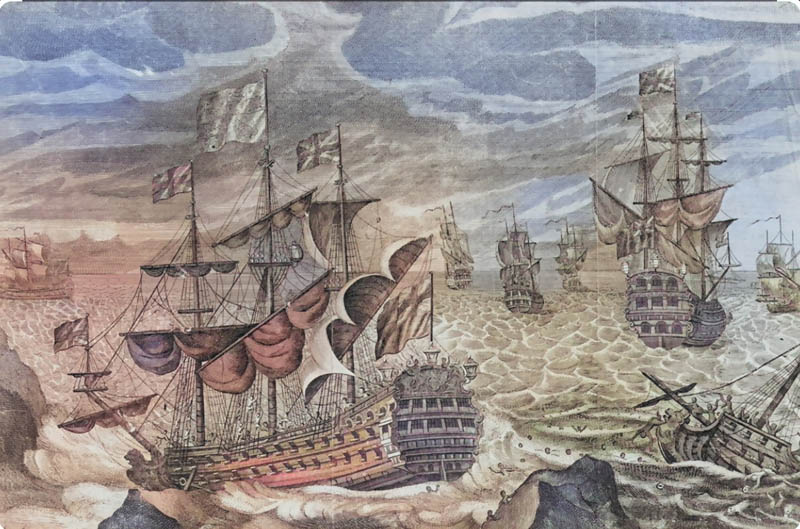
In one accident alone, pictured below, the British may have lost 2000 sailors.
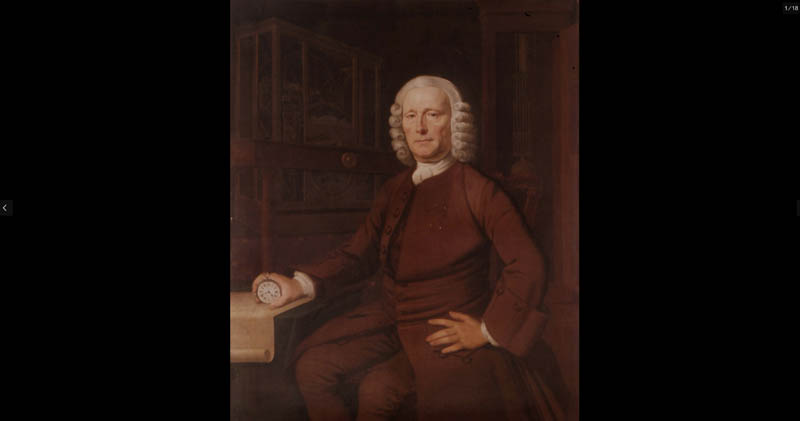
Fifty-nine years later, in 1773, John Harrison, who had spent most of his life on the project, was recognized as the man who solved that problem by making the first reliable ship's chronometer.
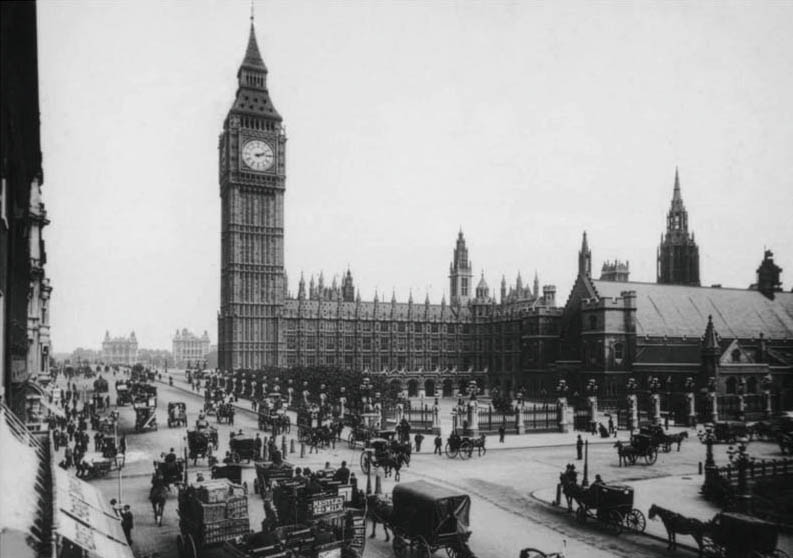
Thus the problem of making an accurate timepiece was solved. Fast forward to 1843, as the British were building the tower at Westminster, popularly called Big Ben.
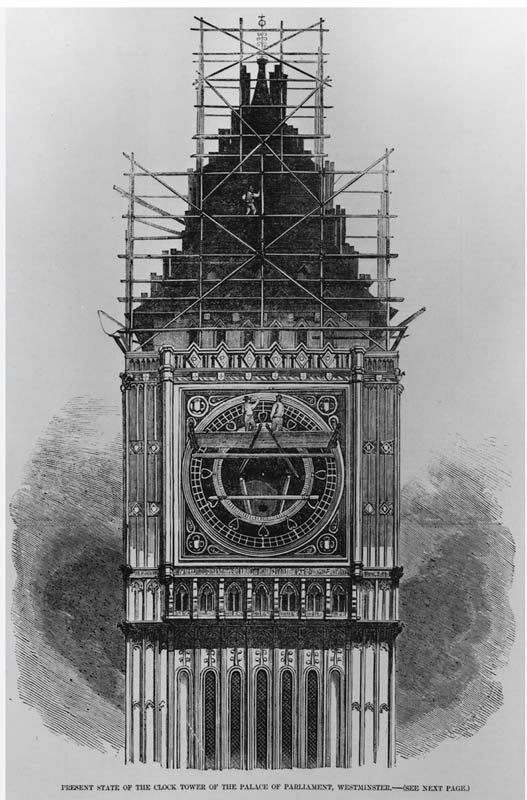
That year, England's Astronomer Royal announced that the contract to build the great clock would be awarded to the company that could make a clock capable of maintaining time to within about a second a day. In other words, the Astronomer Royal wanted a chronometer on a tower.
Many clock makers of the day considered that impossible because birds, wind, and snow would always affect the large clock hands and transmit this force back through the clock mechanism, eventually reaching the pendulum.
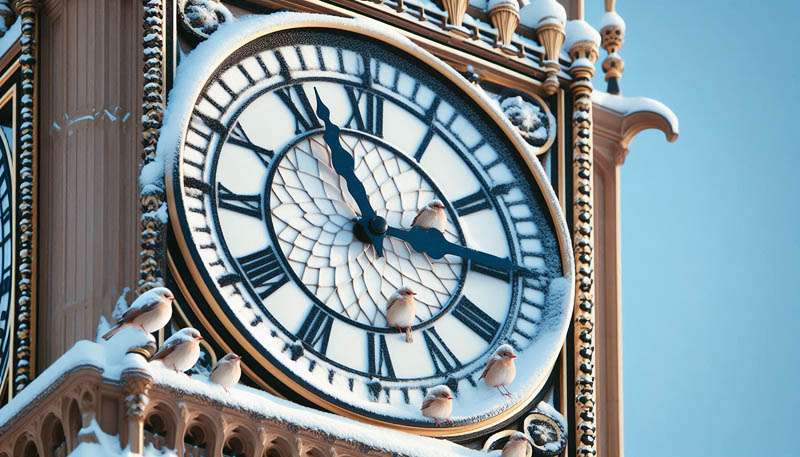
They all realized that the clock needed a pendulum about 14 feet long. That would give them a steady two-second beat and allow for their innovative temperature compensated pendulum to work.
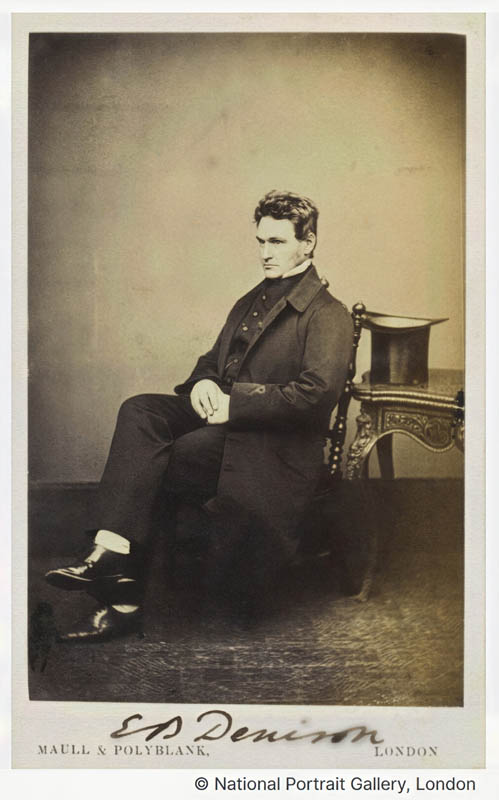
Finally, 11 years later, in 1854, Edmund Denison invented the 3-legged gravity escapement (often called the Denison escapement), which isolated the pendulum from external disturbances like wind, snow, and birds on the hands.
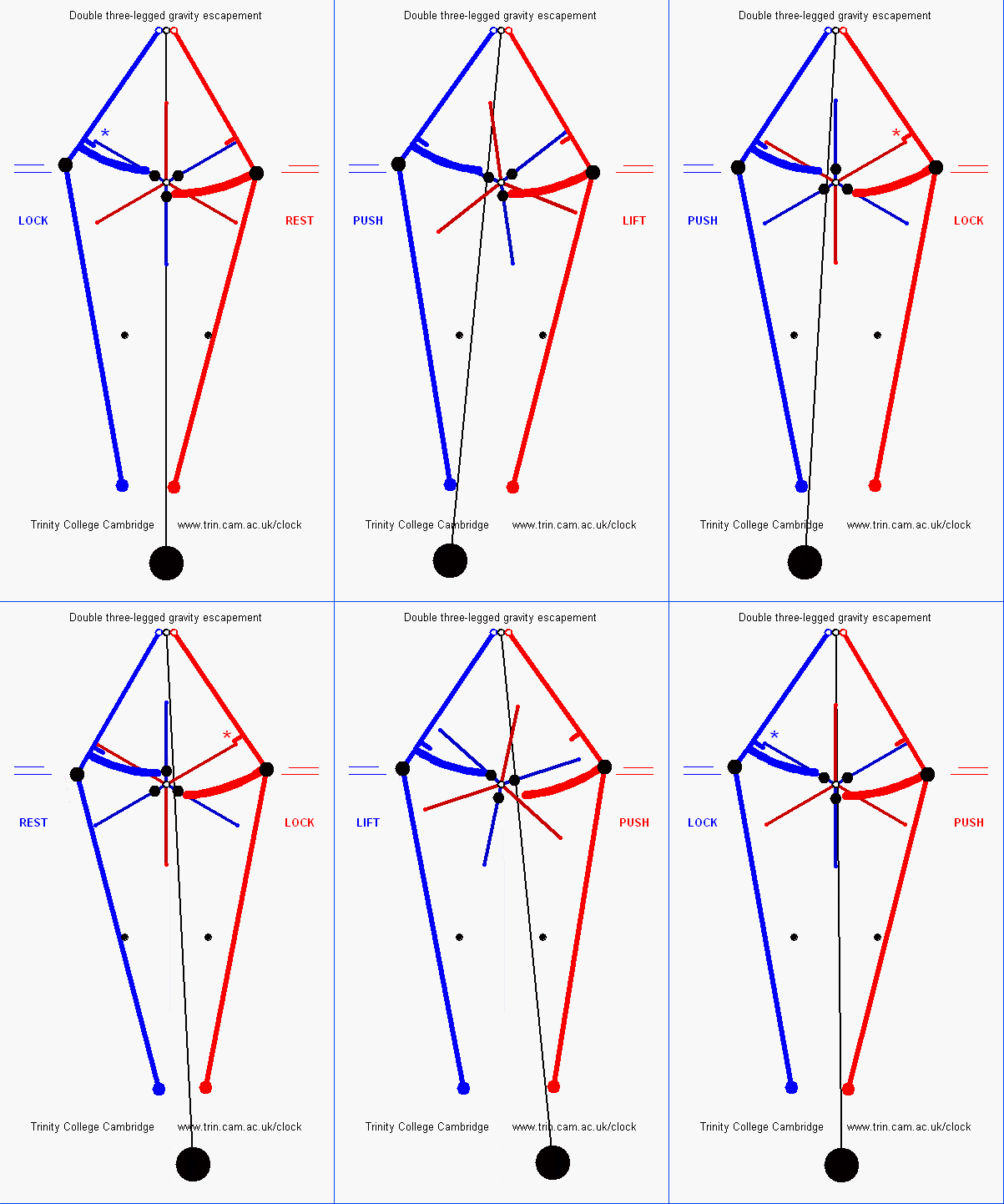
On May 31, 1859 – The Great Clock at Westminster started keeping time for all of London, and the age of public precision timekeeping was born.
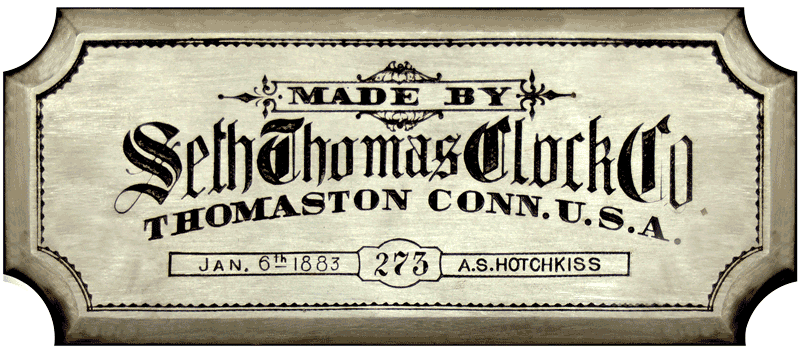
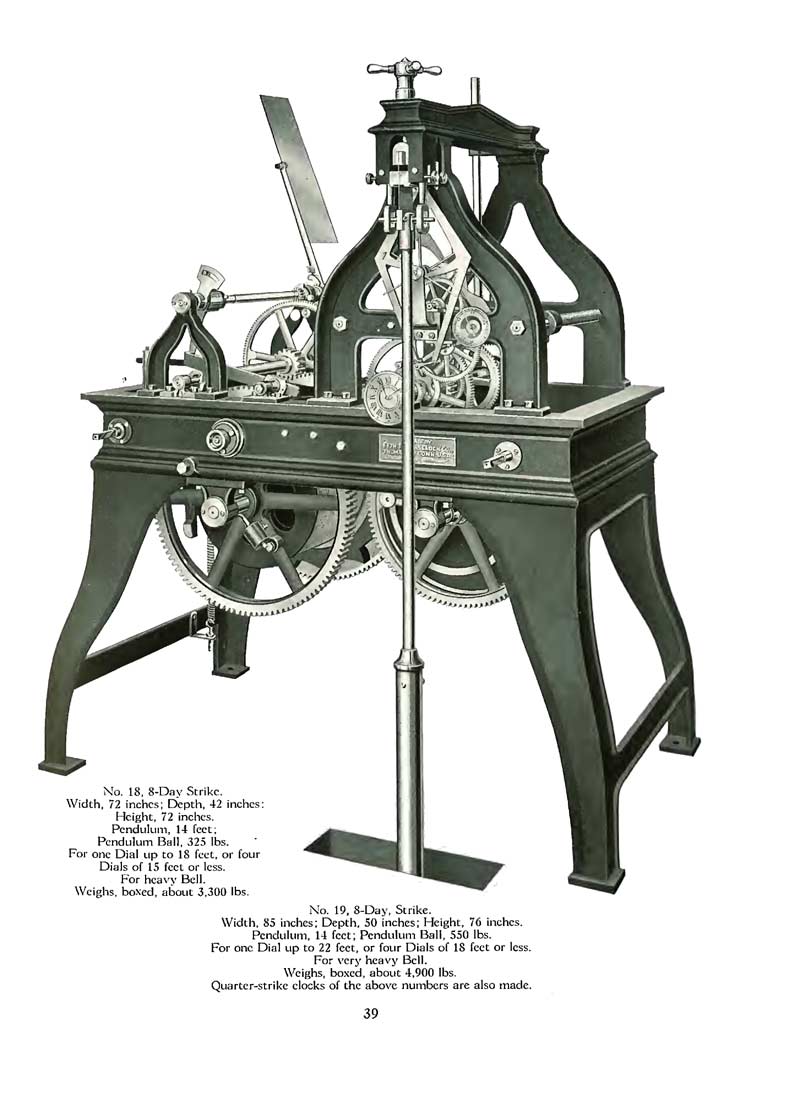
Thirteen years after Big Ben started ticking, in 1872, The Seth Thomas clock company in Thomaston, Connecticut, acquired a company that specialized in tower clocks. The head of that company, Andrew S. Hotchkiss, helped develop a way to make a compact tower clock that could be mass-produced, put in a box, and shipped by rail across the country. About 150 of those clocks were produced.
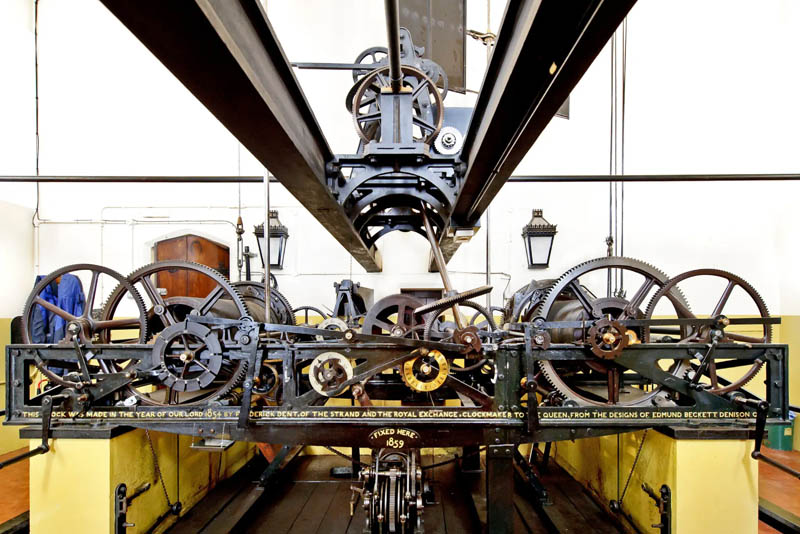
As an example of Hotchkiss's genius, have a look at the movement of Big Ben:
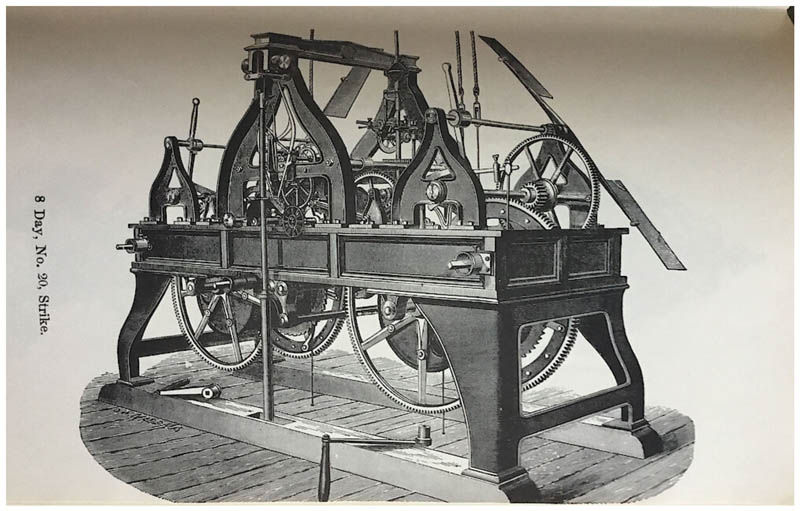
And check out Hotchkiss's repackaged version as it appeared in an early Seth Thomas catalog:
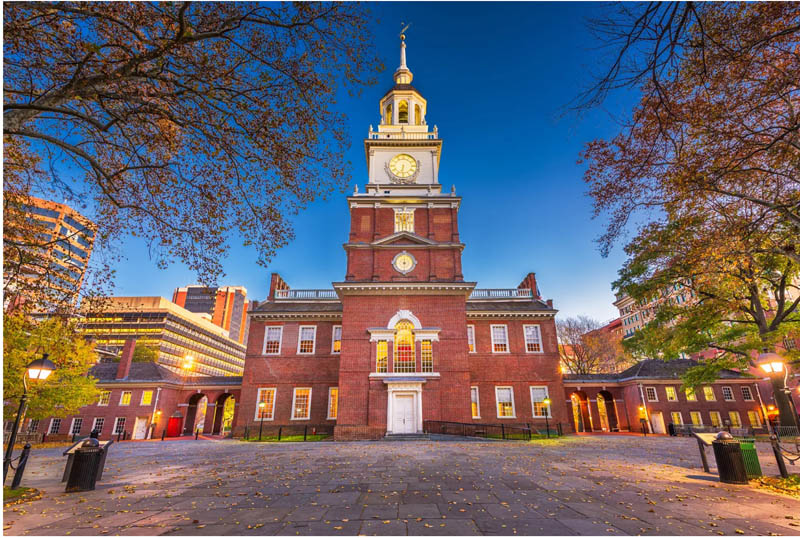
One of their early clocks, installed in 1876 in Independence Hall in Philadelphia, PA, is still ticking, although now partially electrified.
A few years after that, possibly after hearing about or seeing the clock in Philadelphia, the leaders of Portage County, Ohio, decided to buy the #18.
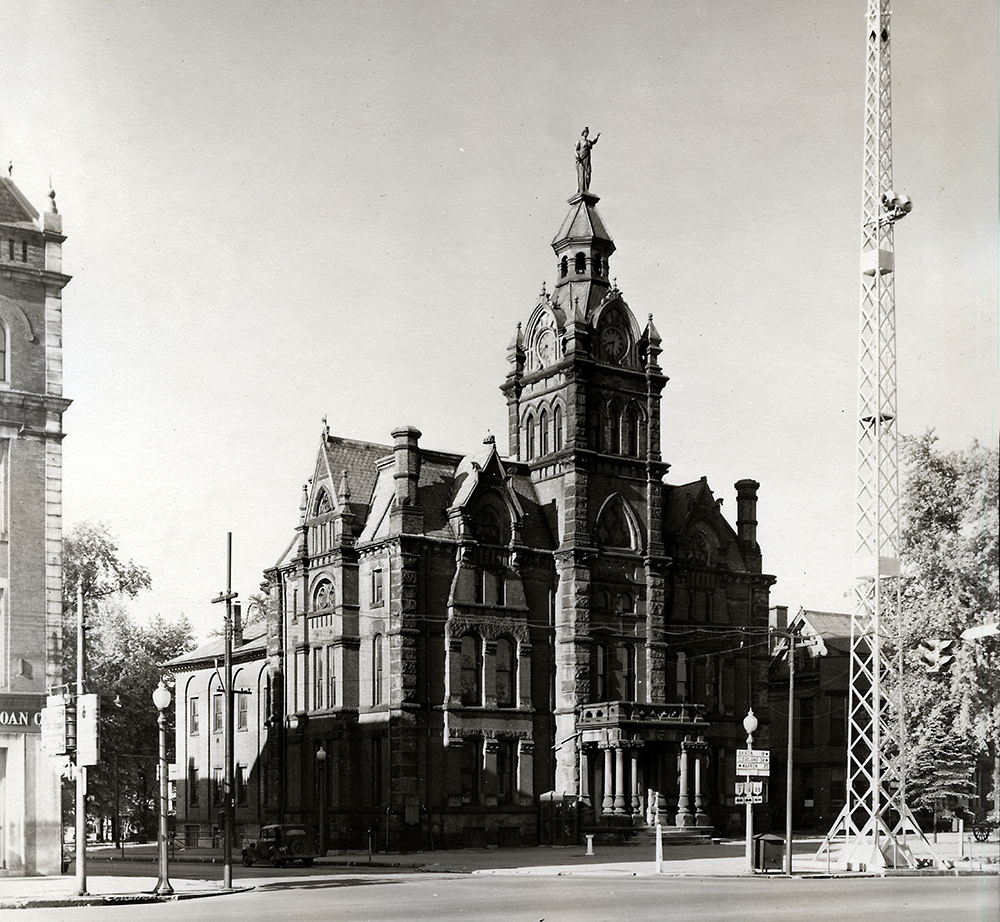
Our history ends with the clock at the top of the Portage County Courthouse where it was installed in 1883 and ran until the courthouse was demolished in 1960.